
Precise and Safe: How Noise Reduction is Revolutionizing Robotics
Imagine navigating under a clear night sky with the stars as your reliable guides. But what if some of those stars, like Polaris — the North Star, were slightly out of place? Even …

Technology
A light-field camera records a scene from several slightly offset perspectives at once. From the shift between these views, the LumiScan software computes the depth of every pixel – in a single shot, with no pattern projection and no moving parts.
1Every view sees the same point at a slightly different position in the image. This shift is called disparity.
2Stack the image rows of all views on top of each other and a point forms a straight line – the epipolar plane image. Near points make a shallow line, distant points a steep one.
3The slope gives the distance: Z = f · b / d, with focal length f, view spacing b and disparity d. Because many views contribute to the same line, the estimate is robust against noise and occlusions.
Drag the yellow point or use the slider. Example values: 7 views, spacing b = 80 mm, focal length f = 200 px.
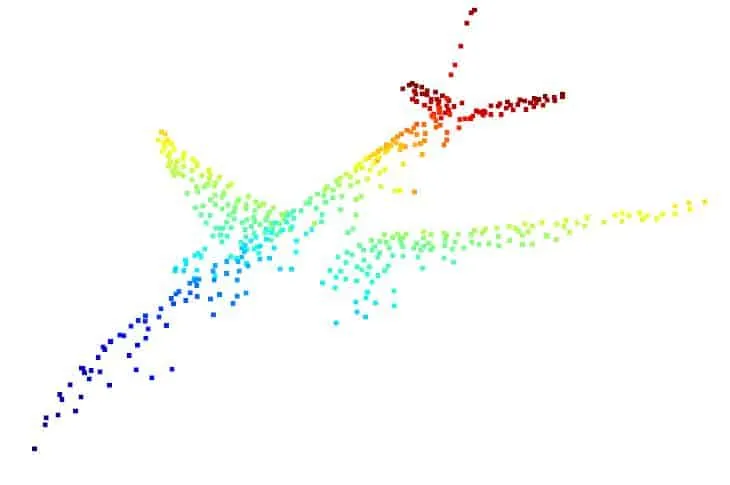
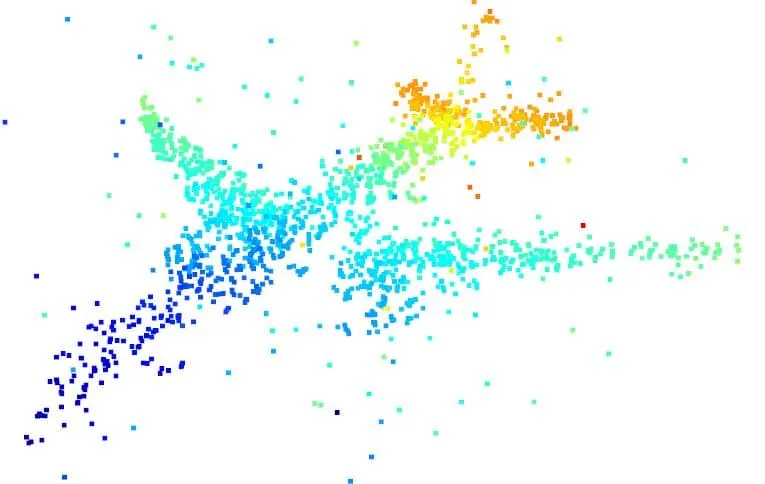
Every depth measurement contains noise. Before a robot grasps, the software removes outliers and smooths surfaces without blurring edges. Drag the slider to compare a point cloud before and after filtering.
Imagine navigating under a clear night sky with the stars as your reliable guides. But what if some of those stars, like Polaris — the North Star, were slightly out of place? Even …
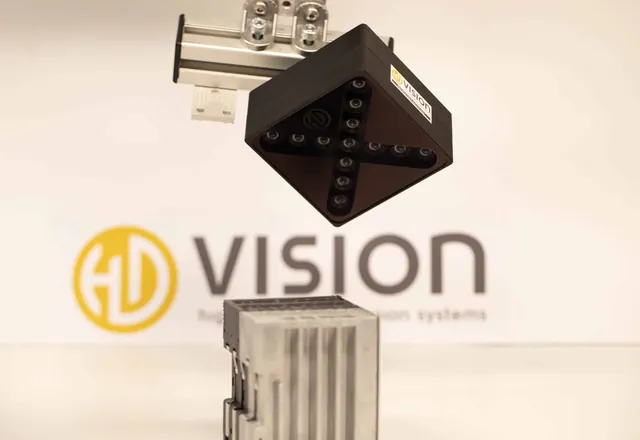
In order to demonstrate the possibilities of the light field technology of HD Vision and rabbit AI, optically difficult objects with highly reflective materials were used for the …
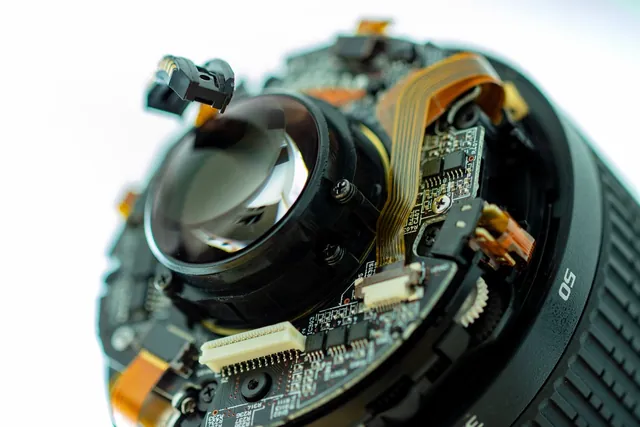
Plenoptic cameras, known as light field cameras, best capture light fields. How do robotic systems use light field data? What new features does this type of camera create? How do …
In a few steps the solution finder shows which LumiScan apps fit your task and prepares your enquiry.